After a heated summer of mugginess, October is finally here, bringing along crisper air and a non-stop barrage of advertisements for pumpkin spice flavored foods and drinks. Even without these seasonal cues, we'd all know it was a new month just based on the eerie energy alone. What better time of year for the supernatural holiday of Halloween than October?
All Hallow's Eve first originated as a Celtic Festival. The Celts believed that on Halloween night, the boundaries between the world of the living and the world of the dead converged. Their celebrations involved dancing around bonfires while wearing costumes comprised of animal heads and skins. Now, 2000 years later, the ritual of dressing up Halloween night remains and some of us even push this tradition onto our dogs. According to the National Retail Federation, Americans spent $350 million on Halloween costumes for their pets in 2016.
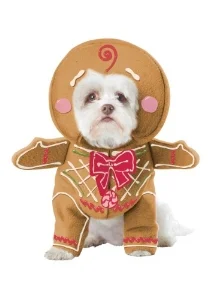
"...Kill me...".
There's nothing wrong with putting a physical costume on a dog. The part we need to address is the number of humans who unknowingly force their dogs to wear a mental costume all year long.
The first thing dog owners must understand is just that: they are an owner of a dog.
Not a child. Not a kid. Not a girl. Not a boy. Not a "fur baby".
An animal. A mammal. A species. A breed.
We have to respect that dogs are perfectly content being dogs, just as we are happy being human. (Well, most of us...) A dog always respects who we are as a human being and, in return, the human unwittingly disrespects who the dog is. As a species, we seem to be very prone to this ignorance. We frequently harm by acting before taking into consideration what is best for Mother Nature. For example, we humans are the ones who pollute the oceans, not any other species on this Earth. Just as there are consequences to pollution, there are consequences to failing to respect the Canis lupus within the Canis lupus familiaris. The dog is 99.9% genetically linked to the Gray Wolf – the only difference being the phenotype (which we will get into in another article).
When we treat a dog like a human, we are essentially telling the dog they have no right to be a dog. When we treat them like a human, talk to them like a child, when we believe they think like us with our emotion, our intellect, and our spirituality, we blatantly disrespect the very spirit in which the dog is born with.
One of the great qualities of a dog is their unconditional love for us: for who we are and for what we are. When we love dogs in the same way dogs love us, we create a strong and unspoken bond based in mutual respect, trust, and devotion.